


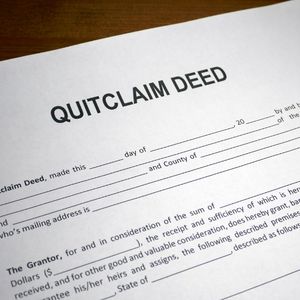
 Quitclaim Deeds allow you to transfer interest in a property without the complicated legal issues that come with using other types of property deeds. Quitclaim Deeds are especially useful for transferring rights quickly between family members or during a divorce, as long as there is a mutual trust. Unlike Warranty Deeds, Quitclaim Deeds do not guarantee the grantee gets a clear title; instead, they just convey whatever interest the grantor has. In Colorado, Quitclaim Deeds are a legally binding, acceptable form of property deed that is, in many cases, cheaper and quicker to complete. Therefore, people considering selling their house or other real estate property using a Quitclaim Deed are using a legal, simplified process to transfer property that is, in many cases, a real estate transaction that is streamlined, making the process of transferring the property clear and easy.
Quitclaim deeds do not guarantee there are no encumbrances on the property, and while sellers are giving up their rights, there are still risks that buyers must take. Sellers are obligated to disclose the deed’s limitations if the seller is using it to transfer the house title while omitting issues related to the condition of the title. In Colorado, quitclaim deeds are appropriate only when both parties are fully informed of the property’s history and have the necessary legal rights.
When considering the use of quitclaim deeds for property transactions, homeowners should be aware of the following key considerations to make informed and practical decisions:
-
- Investigate the property thoroughly for any old liens, claims, or disputes: Understanding the claims against the property or liens on the property is important for avoiding disputes or future worries about financial obligations.
- Make sure there is understanding and trust among the parties: Because quitclaim deeds are non-warranting, trust and communication are key to a successful execution of non-warranting deeds.
- Take a long look at the situation, and in the context of the situation, listen to your attorney about how to cover issues sufficiently and protect against uncovered issues: Attorneys provide the most adequate coverage against the issues that are potentially most complex in the situation.
- When appropriate, consider other deeds: Depending on the situation, other deeds can be a lot more comforting in terms of really holding the title in terms of what the rights are to the property.
- Make sure the documents are legal in your municipal locale: Any legality to the transaction means less chance of a legal problem.
- Make sure you tell the buyer about the unsatisfied title and the absence of unencumbered rights: It is a fact that claims against the title are not guaranteed against claims of the title.
- Analyze the costs involved and the future financial risks or disputes that may arise: Although the costs associated with quitclaim deeds may be reasonable, the costs associated with future title disputes or claims may outweigh any potential immediate cost savings.
These recommendations assist homeowners in understanding the implications involved with using quitclaim deeds in their property transactions.
 In Colorado, county-level deed recording is a necessary step for real estate transactions that involve quitclaim deeds. Colorado state law stipulates that for completion of a property transfer via a quitclaim deed, the deed is required to be recorded at the county clerk & recorder’s office. Recording the document protects the transferor, the transferee, and the parties involved in the transaction from an unrecorded deed, leaving the property’s title clouded. Recording fees may differ from county to county, but the process for recording a deed is, for the most part, the same. Recording employees of the county clerk and recorder’s office require that the deed have a fully completed and legally adequate description of the property and that the correct parties have signed the deed before a quitclaim deed transaction can be completed.
An accurately executed quitclaim deed finalizes the grantor’s rights and interests, solidifying new ownership of the real property. Sellers must take care to be as accurate as possible and follow all steps to avoid delays or possible invalidation of the deed. Working with attorneys who know local customs ensures that state and county requirements are met. Even though quitclaim deeds appear simple, the nuances of county recording requirements must be followed to the letter for an enforceable deed.
 There are potential drawbacks and considerations of selling a house with a quitclaim deed in Colorado. The biggest issue is the absence of title warranties, meaning the property cannot be guaranteed as lien-free or free from other claims. With quitclaim deeds, there are risky title issues after the sale, and there is no legal recourse against the seller, which is why quitclaim deeds are almost never suitable for transactions involving strangers. Legally, there is a need for clear legal descriptions. While less detailed descriptions are allowed for warranty deeds, greater detail is needed in the legal description; otherwise, there are issues with property rights and boundaries. Mortgages complicate matters as well, as the lenders must be notified of the quitclaim deeds since it may trigger a due-on-sale clause, which is an immediate payment of the loan.
Regarding real property loan obligations, sellers should examine how quitclaim deeds may impact obligations, affecting deeper concern and mortgage deeds. Such unconstructive sentiments may decrease the number of prospective buyers and the market value of the estate. Considering Colorado’s legal framework, the rights and obligations of the seller, and the fit of quitclaim deeds into the real estate strategy, sellers are advised to consult attorneys specializing in this field. Looking at the aforementioned factors helps sellers to manage their expectations and embrace the impact of the challenges involved in selling property and incorporating quitclaim deeds in the transaction.
Regarding real property loan obligations, sellers should examine how quitclaim deeds may impact existing mortgages and legal responsibilities. Potential buyers may have a negative impression of quitclaim deeds, which may cause them to not pursue the opportunity and decrease the property’s potential market value. For homeowners who want a simpler option, cash home buyers in Greeley or nearby cities may offer a faster and more convenient solution, as they are often willing to purchase properties as-is and are familiar with quitclaim deed situations. Given the seller’s rights and obligations, and under the unique legal framework in Colorado, it may be helpful to speak with a real estate attorney to outline the specific obstacles and clarifications in selling a property via a quitclaim deed.